
III
The Last Light
A Dark Fantasy Romance · Nocturnals, Book 3
She went south to measure a reserve. The Queen of Solmere had been holding one note for a hundred and eleven years, and had never once been looked at.
- The couple
- Ivenne Duskmantle and Aurelisse of Solmere
- Register
- Worship, denial, display
- Its instrument
- the Articles of Audience
- Length
- 99,838 words · 332 pp
On the pageDark romance. Contains explicit sex including exhibitionism and formal power exchange; a lover dying on the page and sustained at the edge; mortality written into the intimate scenes; attempted genocide plot. All romantic leads are adults.
Read chapter one — the cellar free · 2,663 words, no sign-up
The book
Ivenne Duskmantle keeps accounts. She does not keep feelings. At the last court of the light she learns the Lumen are not children of the sun — they fled it — and that Queen Aurelisse is rationing her people to death on a law she wrote so that she would feed last. Wanting, in this palace, is a food. Asking for it is a rite.
Aurelisse can see herself only in a room with no mirrors. Ivenne will not spend the last of a country even to save it. They ask anyway.
A standalone dark sapphic fantasy. Dying queen / ice-cold accountant. Display and denial. Open-door explicit heat. Nocturnals, Book 3. Complete in itself. Best read after The Hunt. 18+.
Read the full description
She went south to measure a reserve. The Queen of Solmere had been holding one note for a hundred and eleven years, and had never once been looked at.
Ivenne Duskmantle keeps accounts. She does not keep feelings. She is Corvain’s sister, famously unglamourable, and she has been not-wanting for five centuries — the family answer to the family wound. Vespertine has nine hundred and forty gallons of recovered rot in the cellar that will not burn, drown, freeze, or dilute. Only concentrated sunfire has ever been shown to touch it. Solmere hoards the last of it and does not trade. Ivenne goes south to ask.
Court Solmere is a palace of mirrors rationing the world’s last hoarded daylight. Splendour over famine. Lumen dimming in the halls. A queen performing radiance. Queen Aurelisse is the oldest living light, sustained a century on the ambient worship of subjects and starving in every way that matters, because worship is not desire. She fixes on Ivenne at once: the only creature in that palace who looks at her without hunger — the first honest gaze in a hundred years, and the only one that could actually feed her if it ever warmed.
The Lumen are not children of the sun. They fled it. They have misremembered that on purpose for two thousand years, and the oldest songs still know. Wanting, in this palace, is a food. Asking for it is a rite. One audience per night. One truth traded per audience. Every intimate scene is also a disclosure — the heat ladder and the plot ladder are the same ladder. Aurelisse can see herself only in a room with no mirrors. Ivenne will not spend the last of a country even to save it. A faction in the light would rather burn the dusk-lands than go on dim. They ask anyway.
Ivenne’s last anchor-candidate died five centuries ago, and she has been empty on purpose ever since. Aurelisse wrote the ration so that she would feed last. Neither of them came to Solmere to be seen. The shard in the reserve is not a metaphor and it is not empty, and vampire-sight can read what Lumen eyes were taught not to. Ivenne came to measure a quantity. She stays because the quantity has a name, and because a queen who has not been wanted in a century has started to ask for a specific person.
A standalone dark sapphic fantasy. Dying queen and ice-cold accountant. Display, denial, exhibitionism, formal power exchange. A lover held at the edge of dying in the same scenes that feed her. If you want a palace romance where looking is the act, and where the woman who wants nothing has to learn how, this is the book.
Book 1 was candlelight. Book 2 was weather. This one is mirrors, ration, and famine dressed as splendour. The erotic mode is attention itself: watching, being watched, withholding the gaze, giving it so specifically that a dying sovereign can eat. Ivenne will have to want, openly, on the page, or Aurelisse will go out. There is no third option that keeps the country and the woman. The sun, she will learn, is not dying. It is being paid out. That sentence is not the ending. It is why she cannot go home with a number.
Nocturnals, Book 3. Complete in itself. Best read after The Hunt — the cellar Ivenne is trying to solve is not a metaphor. Open-door explicit heat. 18+.
On the page: explicit sex including exhibitionism and formal power exchange; a lover dying on the page and held at the edge; mortality written into the intimate scenes; attempted genocide. All romantic leads are adults.
Free to read · no sign-up
Chapter One — The Cellar
- Length
- 2,663 words
- Of
- 36 chapters
- Volume
- Book 3 of 5
- Heat
- Explicit · 18+
This is the opening of Book 3. It stands on its own as a romance, but it is written after The Tithe, The Hunt and assumes their world. Start at Book One if you would rather nothing was given away.
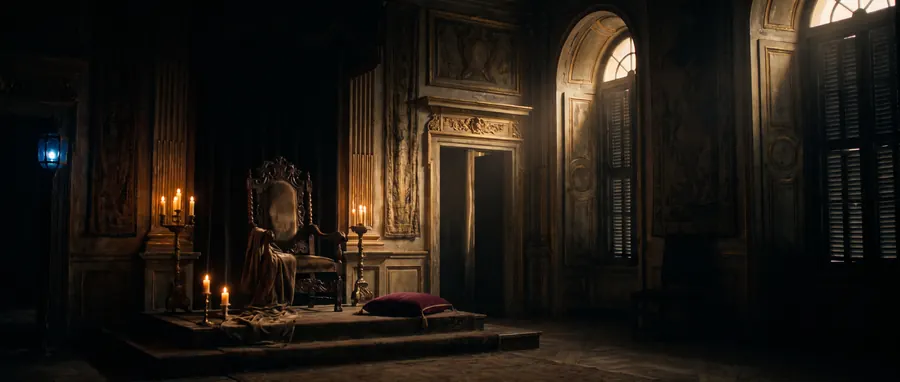
There are nine hundred and forty gallons of it under this house and I am the only person in the building who will go down and look at it, which is not courage and which everybody has decided to call courage.
It is not courage. It is that I am the one who keeps the inventory.
Nine hundred and forty gallons, in four hundred and eleven vessels, of which three hundred and seventy-two are the original wax-collared cans out of the wings and thirty-nine are ours, because the cans leak at the collar after about a year and we have had to decant.
Decanting was my idea. I supervised it personally over six nights in the autumn, and we lost eleven gallons in the process, and the eleven gallons went into the stone of the cellar floor where they remain, and that floor is now roped off and will be roped off after this house has fallen down.
I have the whole of it in a book. Vessel by vessel: origin wing, date of seizure, weight full, weight empty, collar condition, and a column at the right-hand side that I head changes and that has one hundred and six entries in it, because the stuff is not inert and anybody who tells you it is inert has not weighed it twice.
That is the point I have been making to my brother for eleven months and that he has been declining to hear.
It gets heavier.
Not much. Not fast. Four hundred and eleven vessels weighed quarterly for eleven months and the aggregate is up by something under two pounds, which is inside the error of my scales and which I would throw out of anybody else's return.
Except that it is up every quarter, in the same direction, by roughly the same amount, and a thing that drifts one way inside the error of your instrument four times running is not drifting. It is going somewhere and your instrument is not good enough to watch it go.
We have tried four times to destroy it and I am going to set out all four, because the fourth is the reason I am sitting on a coach at midwinter with a sealed sample in my luggage and I will not have it turned into a ghost story.
The first was fire, in the spring, in the old forge yard, under my supervision, with seven people present and every one of them at forty feet.
It does not burn. That is not a figure of speech and it is not that it resists burning; a thing that resists burning gets hot. We had a gallon of it in an iron crucible over the best fire this estate can make for six hours and at the end of the six hours the crucible was cherry-red and the contents were cold, and my thermometer said what it had said at the start, and I have never in eight hundred years been so annoyed by an object.
The second was water. It does not dilute. It sits in it. We poured a gallon into ten gallons and after three days there was a gallon of it at the bottom of the vessel with a perfectly flat interface and ten gallons of water above, and the water was fit to drink, which I established on a rat and then, because I am not a coward, on myself.
The third was cold, on the reasoning that a thing which does not respond to heat may respond to its absence. We put three vessels into the ice-house in the eleventh month and left them the winter.
They took the ice down with them. Not melted — I want to be exact, because this is the finding I would put in front of a Compact commission if a Compact commission would sit for me. The ice in that house went thin. Twelve tons of it, laid down in the spring, gone by the third month at a rate three times anything in forty years of the ice-house book.
The stuff had eaten the winter.
And the fourth was Corran Ilves, who was our cellarman, who was fifty-one years old, and who I am going to name because the alternative is calling him a cellarman for the rest of this account.
Here is the fourth attempt, and I am the one who authorised it.
The reasoning was mine and it was sound. If the stuff will not respond to heat, water or cold, then it is not behaving like a substance — it is behaving like the rot, which is a thing we already know is not a substance, because a physician's daughter out of Meridian proved it six years ago and published the method.
And the rot responds to two things. True light, which we did not then have. And company — which is free.
So I proposed that we put a person in with it.
Not to touch it. To sit in the cellar, with the vessels, in a lit room, with somebody else present at all times, for one hour a day, and see whether the aggregate weight moved.
It is an entirely defensible experiment. I would authorise it again on the same evidence. Corran Ilves volunteered — he volunteered in a room with seven other people in it, he was told the whole of the reasoning including the parts I was unsure of, and he asked six questions and every one of them was better than mine.
He did nine hours across nine days.
On the ninth he came up the stair at the end of his hour and stood in the passage and said, quite normally, "There's a lot of them, aren't there," and went to his supper.
And on the tenth morning he could not tell his wife what her name was.
He is alive. I want that on the page immediately, because the version of this that has got about the vale has him dead and I have had to correct it a dozen times.
He is alive, he is at his sister's at Candlemoor, he is fifty-two years old, and he is very well. He is polite and cooperative and reasonable and he answers every question you put to him.
Liora Vess has him under the lamps six hours a day and has flattened the decline twice, and she has told me — in a corridor, in the flattest voice I have ever heard her use, which is saying a great deal — that flattening is all there is and that he will not come back and that it took nine hours.
Nine hours. In a lit room. Not touching it.
Merta of this house took eleven months to get where Corran Ilves got in nine hours, and Merta was fed on by a stranger in a passage, and my brother has spent four years thinking the difference between them is a matter of degree.
It is not a matter of degree. Whatever is in those four hundred and eleven vessels is the same thing that killed Seraphine Aubray over six years and it is concentrated, and we have nine hundred and forty gallons of it under a house with two hundred and forty people in it, and I have said so at every quarterly meeting since the autumn in increasingly plain language.
I stopped the experiment the same morning. I wrote the whole of it up, including my own reasoning and my own authorisation and the fact that it was my idea, and I put a copy in front of the household and read it aloud, because in this house we do not keep things in doorways any more and it turns out that applies to me as well as to everybody else.
Corran's wife has never once said anything to me about it. She is in the laundry. She says good evening.
I would rather she did not.
My brother comes down to the cellar in the third week of the twelfth month, which is the first time he has been down there since the spring.
He stands at the bottom of the stair with a lamp and looks at four hundred and eleven vessels stacked four high on new-built racks, and does not say anything for a while.
"You have moved them."
"I have moved them off the floor and off the north wall, which is the wall under the nursery passage." I do not look up from the book. "I raised it in the ninth month and again in the tenth and you were in Meridian both times."
"Ivenne—"
"There are a dozen children in this house, Corvain, and until the autumn nine hundred gallons of it were sitting against a wall eight feet under where they sleep, and it was not a decision anybody made. It was that the cellar had a north wall and the carts came in that door."
He is quiet.
"How much has it moved?"
"Under two pounds across eleven months, aggregate, which is inside my error." I close the book. "And it has moved the same way four times running, and if you ask me whether that is significant I shall tell you what I have told you three times, which is that I do not know and that not knowing is the entire problem."
"And the light?"
"The lamps hold it." I take my spectacles off and clean them, which is a thing I do and which I have been informed by three separate people is a tell. "That is the finding. Forty-one Meridian lamps in that cellar at full burn and the aggregate does not move at all — it stops, it does not reverse. We are not treating it. We are holding it, at a cost of twelve hundred quarts of sun-oil a season, which is one and a half times the whole estate's light budget in the year before the fire."
"We can afford it."
"For forty years," I say. "I have done that column too."
He does not ask me. That is the thing about my brother that nobody outside this family has ever understood: eight hundred and thirty-seven years old, and he will stand in a cellar for a quarter of an hour arriving at a question rather than put it.
So I put it for him.
"You want me to go to Solmere."
"I want somebody to go to Solmere."
"You want me to go to Solmere, because you have already had this argument with Liora and with the captain and with Vhorel by letter, and every one of them has told you the same thing, and you have come down four flights of stairs into a room you do not like in order to have it told to you a fourth time by somebody who will be rude about it."
Corvain looks at the vessels.
"Yes," he says.
"Then say the errand properly and I shall answer it properly."
And my brother — who has become, in four years, a person who says things out loud, and who is still bad at it, and who I would not have back the way he was for the whole of Solmere's reserve — says:
"There is one substance in the recorded world that has ever been shown to break that stuff rather than hold it, and it is concentrated sunfire, and there is one place in the dusk-lands that has any, and they have been hoarding it for two thousand years and they do not trade.
"And I want you to go and get it."
"On what terms?"
"Any terms."
I put the book down on the rack.
"Corvain," I say. "That is the single stupidest sentence you have said in my hearing since the reign of a king nobody remembers, and I would like you to hear it back.
"You have just sent an emissary to a foreign court with any terms. If I take that instruction at its face I may pledge this estate, its dependents, the orchards, the four valleys and the whole of the transferred file, and you would be bound, and Argent would have the lot inside a year."
"I am aware of what I—"
"Then draft it," I say. "Properly. With a ceiling and a schedule and a clause about what I may not commit, and I shall want it under your hand and lodged with the household before I go, because I am going to be four hundred miles away for six months and I will not have this house's future depending on my judgement of a room I have never been in."
He almost smiles. I have not seen my brother almost-smile in about four hundred years and I put up with a great deal for it.
"You have not asked me the other question," he says.
"I know what the other question is."
"Ask it anyway. Out loud. We have a rule."
So I ask it, standing in a cold cellar with four hundred and eleven vessels of a thing that eats winters.
"Why me?"
"Because a Lumen court cannot buy you," says the Lord of Vespertine.
And there it is: the sentence he has been walking down four flights of stairs to say, dressed up in exactly the way I told him not to dress it, and I have to take my spectacles off again.
"That is not a virtue," I say.
"Ivenne—"
"It is damage, Corvain, and you of all creatures in this world should not be standing in a cellar calling it a qualification." I put them back on. "A Lumen court cannot buy me because I do not want anything. And I do not want anything because in the year two hundred and sixteen before the calendar a woman called Perrine Alder died in a house at Selhan, and I decided in the fortnight afterward that wanting was an expense I would not carry again, and I have not carried it since, and it is now five hundred and thirty-three years.
"That is not immunity. That is a very long and extremely well-kept debt, and you have precisely the same one, and the only difference between us is that yours had a wing to it and mine had a fortnight and a decision.
"So do not tell me I am the right emissary because nothing can buy me. Tell me I am the right emissary because I am the only creature in this house who has arranged their entire existence so that there is nothing left to sell."
The cellar is very quiet.
"Yes," says my brother. "That is what I meant."
"I know it is what you meant. I would like it said."
"Then it is said," he says, "and I am sorry, and I would rather send anybody else in the world, and there is nobody else."
I pick up my book.
"Good," I say. "Then we understand each other and I shall want the instructions by Thursday.
"And Corvain — one more thing, and then we will go up, because it is cold and you have got that face on.
"If it works — if there is any sunfire at all to be had — I have costed it. At the rate Solmere is said to produce, and assuming they would give us the whole of it, which they will not, nine hundred and forty gallons is a nineteen-year undertaking."
He looks at me.
"Nineteen years," I say. "And the wings are still running, and there are ten of them, and every quarter there is more of it in the world than there was.
"So whatever I bring back from that palace will not be a solution. It will be the beginning of a schedule.
"I would like you to have understood that before I go, so that you do not spend six months hoping."
What you get
Three editions of the same book.
The paperback is a 6 × 9 in perfect-bound trade edition of 332 pages. The ebook is the EPUB itself, without DRM, for any reader you own. The audiobook is 10:01:22 across 38 MP3 files, narrated by a digital voice and kept rather than streamed. Buy all 5 volumes in paperback and every ebook and audiobook comes with them.
lesbian dark fantasy romance · vampire and light queen · f/f romantasy explicit · dying lover romance · exhibitionism power exchange · gothic palace romance · sapphic morally grey romance
| Words | 99,838 |
|---|---|
| Pages | 332 |
| Trim | 6 × 9 in |
| Runtime | 10:01:22 |
| Tracks | 38 |
| Set in | DR 317 |
| ISBN, EPUB | 979-8-90623-935-8 |
| ISBN, MP3 | 979-8-90623-936-5 |
| ISBN, paperback | not yet registered |
Page count measured from the print file; runtime measured from the audio masters on 2026-08-29.