
II
The Hunt
A Dark Shifter Romance · Nocturnals, Book 2
She came to count the border. The alpha of Greywater would not let her file what she found.
- The couple
- Maren Callow and Sarn Veilborn
- Register
- Primal, pursuit, claiming
- Its instrument
- the four clauses
- Length
- 99,370 words · 339 pp
On the pageDark romance, one step past Book One. Contains explicit sex including consented primal play and marking; trafficking and captivity; institutional betrayal; violence and grief. All romantic leads are adults.
Read chapter one — the appointment free · 2,375 words, no sign-up
The book
Maren Callow is an inquisitor of the second grade. She does not enjoy her work. She is extremely good at it. When the coaches leaving the eastern road no longer match the coaches that come back, she follows the numbers into pack country — and into Sarn Veilborn, who will not be a line in anybody’s report.
The Compact is lawful. That is the problem. People are disappearing under a warrant that looks clean on paper. He wants her marked. She wants the ledger. Neither of them can win this in the building that wrote the law.
A standalone dark shifter romance. Enemies to lovers. Inquisitor / alpha. Open-door explicit heat. Nocturnals, Book 2. Complete in itself. Best read after The Tithe. 18+.
Read the full description
She came to count the border. The alpha of Greywater would not let her file what she found.
Maren Callow is an inquisitor of the second grade. She does not enjoy her work. She is extremely good at it. When the coaches leaving the eastern road no longer match the coaches that come back, she follows the numbers into pack country — sixteen live transfer wings, a rota tuned to the interval at which people stop dying, and a warrant that looks clean on paper. The Compact is lawful. That is the problem.
Sarn Veilborn will not be a line in anybody’s report. He is the alpha of Greywater, and he has been watching the same coaches Maren came to count. He wants her marked. She wants the ledger. Neither of them can win this in the building that wrote the law — a building that has been assigning other people’s oaths onward, in perpetuity, without asking again, for two hundred years, and calling it procedure.
People are disappearing under a clause that honest officers enforce correctly. There is no conspiracy to unmask. The horror is a printed schedule, a Board that redistributes throughput when a wing is closed, and a precedent that once took fourteen pack children into lawful wardship and sent four of them home. Maren was raised in the orphanage that clause filled. She sat beside one of the children who came back. She is not here to fall in love with a wolf. She is here to make the count come right. He will not let her do it from a desk.
The eastern road still runs. The coaches still look unmarked. What they carry west is cold in a way that has a bottom to it, and what they carry east does not come back as the same kind of person. Maren can prove the arithmetic. Sarn can prove the ground. Between them is a winter at Greywater, six quiet houses that used to have lords, a moot that will not like either of their answers, and a chase that is a courtship only because she said it could be stopped.
She files. He hunts. She will not be claimed as a prize for doing her job; he will not be a citation. The heat is pursuit with rules — four clauses, a word that ends it, used. If you want an inquisitor who loves a ledger more than a man and a wolf who makes her rewrite the ledger anyway, this is the middle door of the series.
The quiet at Vespertine is not a local tragedy. It is a date on a border that has been even for a century and a half and then was not. Maren does not know yet what that date is for. Sarn has been living on the side of the line that already knows what a missing coach means. By the time they agree on a sentence, people she can name will be gone, and the report she is allowed to file will not be the report she wanted. That is not a tease. It is the kind of book this is.
A standalone dark shifter romance. Enemies to lovers. Inquisitor and alpha. Consented primal play and marking, on the page, with a safeword used mid-chase. The institution she trusted is the villain. The win, when it comes, is deliberately partial — because a lawful machine does not die in one season, and this book will not lie to you about that.
Nocturnals, Book 2. Complete in itself. Best read after The Tithe, where the quiet at Vespertine first dated itself. Open-door explicit heat. 18+.
On the page: explicit sex including consented primal play and marking; trafficking and captivity; institutional betrayal; violence and grief. All romantic leads are adults.
Free to read · no sign-up
Chapter One — The Appointment
- Length
- 2,375 words
- Of
- 40 chapters
- Volume
- Book 2 of 5
- Heat
- Explicit · 18+
This is the opening of Book 2. It stands on its own as a romance, but it is written after The Tithe and assumes their world. Start at Book One if you would rather nothing was given away.
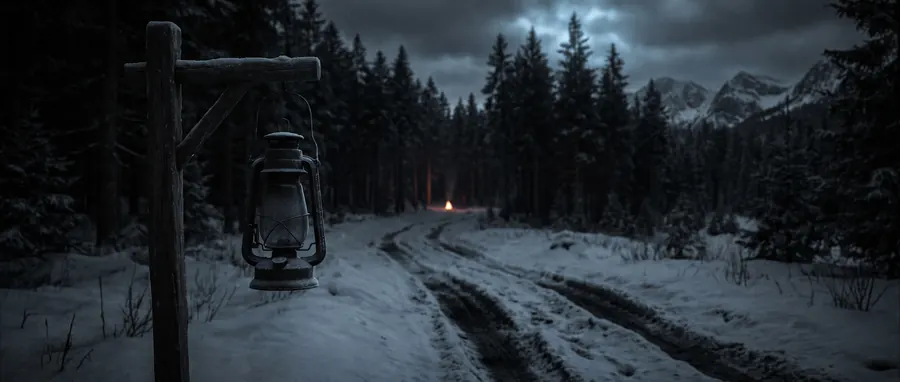
I finish Bellamy on a Tuesday, which I mention only because he asks me to wait until Wednesday and I do not.
He is sixty-one years old. He has been an assessor of the treaty for thirty-four of those years and my superior for six of them, and he taught me how to read a coaching manifest, and he sits across the table in Interview Two at Sable Cross with his hands flat on the wood and says:
"One day, Callow. That's all I'm asking. My daughter's confirmation is tomorrow."
"I understand."
"Then you'll—"
"No," I say.
I turn the ledger round so it faces him and I put my finger on the line.
"Fourth of Sethmonth, DR 309. Harrow Vale grain return, countersigned by you. And the same day, four hours later, a private note of hand for two hundred and eleven crowns from a factor whose entire business is Harrow Vale's flour." I take my finger off the page. "Explain the four hours."
He looks at the line for a long time.
"It was a loan," he says.
"It was repaid in eleven days at no interest by a man who has never once in his life lent money at no interest." I close the ledger. "Assessor Bellamy, I am not enjoying this."
"I know you're not." His voice cracks somewhere in the middle and he steadies it, which I respect. "That's the whole trouble with you. If you enjoyed it I could hate you properly and go home."
I write it up that night and file it in the morning, complete, with the four hours in it and also with the eleven days, and also with a note that the loan was in fact repaid and that the assessor's daughter is being confirmed on Wednesday and that neither of these facts alters the finding but both of them belong in the record.
The Inquisitor-General reads it and says it is a model return.
I do not sleep especially well, but I have never especially slept, and I have long ago stopped attributing that to anything.
Here is what I am, stated plainly, because I am about to spend a great deal of this account being wrong and the reader is entitled to know from what position.
I am Maren Callow. I am thirty-seven years old. I hold the rank of Inquisitor of the second grade in the Praesidium of the Compact, which is the treaty's prosecuting arm, and I have held it for eleven years, which is fast.
I was raised in the Compact's orphanage at Sable Cross, in the north range, with two hundred and forty other children whose parents the treaty had killed or failed or simply mislaid. The Compact fed me. The Compact taught me letters and law and how to hold a pen. The Compact gave me, at nineteen, a coat with its blue on the collar and a life with a shape to it.
I have never once needed to be told to be grateful. I want that understood, because a great many people who came after have decided I was a fanatic, and I was not a fanatic.
I was paid up.
And I believed — precisely, and with the whole of my professional intelligence, and I would have argued it against anybody — that the treaty is not a good thing but is the only thing: that between the daylight nations and the courts of the dusk there is one document, and that the document is the sole reason there is not a war that would end every city on the light-band inside a decade.
A document is only worth the enforcement of it.
I was the enforcement.
The rules must mean what they say, or I am no one. I did not know I had that sentence in me until a wolf made me say it out loud on a hillside in my thirty-eighth year, and by then it was too late to be a comfort.
There is a thing they say about me in that building and I knew about it and I was pleased about it, which is the part I would like on the record.
Callow doesn't want anything.
It began as an insult, I think, somewhere around my fourth year, and by the eighth it had turned into the other thing, and by the eleventh it was the reason I got the difficult files.
And it was accurate. I did not want promotion particularly; I did not want the northern posting that four of my year killed themselves over; I did not want money, having been raised somewhere that supplied everything and taught me to regard wanting as a kind of untidiness.
What I wanted was for the return to be right.
That is not a virtue. I have had eleven years to look at it and it is not a virtue at all — it is the same appetite everybody else has, aimed at a smaller and more defensible object. A man who wants a grade will bend a return to get it. A woman who wants the return to be perfect will bend a person to get that, and I did, four times that I know of, and one of them was an assessor of thirty-four years' standing on a Tuesday with a confirmation on the Wednesday.
The building could not see the difference and neither could I.
They gave me the difficult files because I did not want anything.
And the difficult files, it turns out, are exactly the files where the only thing standing between a schedule and a person is an officer who is prepared to want something.
They give me Vespertine on the Thursday.
Inquisitor-General Ordry Vane hands it to me himself, in his own room, which is not usual for a second-grade appointment and which I note and do not interpret.
He is seventy-four. He has run this arm for nineteen years. He is a small, warm, untidy man with ink on three fingers and a habit of losing his own spectacles onto his own head, and he taught me procedure out of the green book when I was twenty-two, sitting on the corner of a desk, and told me on my first day that an inquisitor's only real weapon is that she is predictable — that everybody in the treaty must know exactly what she will do next, because that is what makes them stop doing it.
I would have died for him. I want that in the record too.
"Argent's petition," he says. "Three counts. It's a nuisance case."
"Sir?"
"They all are, when a court files them." He waves at the folder. "A great house has done something irregular and a rival great house has noticed and wants the estate. That's not a crime, Callow, that's a season. But the petition's in order and the conclave's endorsed it, so somebody goes."
"And I go."
"You go because you're the only officer in this building who will send me back a return that says no case if there is no case." He finds his spectacles on his own head and puts them on and looks at me over them. "Can you do that? Argent has spent money. There'll be an expectation."
"Sir, if there's no case I will write that there is no case."
"Yes," says Ordry Vane. "That's why it's you."
I read the file on the coach, which takes nine days.
Three counts.
One. That the house of Vespertine performed a Rite of Candidature upon a mortal tithe and resolved it into full anchorage in a manner irregular as to form. Substantiated in part; the lord of the house declined the prescribed words in open hall in front of a notary, which is not a crime but is certainly a fact.
Two. That the said house destroyed by fire a wing of its own fabric while that fabric was under Compact assessment. Substantiated entirely and admitted freely, which is the part that interests me, because people who burn things down do not usually admit it in writing to the office that is investigating them.
Three. That the said house has, between DR 252 and the present, transferred out six hundred souls under the Compact's schedule without recording their onward disposition.
Count three is the one that will end my career, and I read it on the fourth day somewhere north of Selhan Cross and thought: sloppy clerking.
I want to be exact about that. I did not think conspiracy. I did not think there is something wrong here. I read a column with six hundred blank onward-dispositions in it and I thought that a house which had been badly administered for sixty years had a filing problem, and I made a note to require a corrected return, and I turned the page.
The whole of what follows comes out of that one wrong sentence.
The assessor's return is attached to the file, and it is the second thing that interests me, because it is signed Pell.
I know that name the way everybody in my building knows that name. Forty-one years in the audit arm. Never promoted, twice refused promotion in writing, which is in his file and which somebody has underlined. The man is a legend in the specific way that a chipped instrument is a legend: everybody speaks of him with enormous respect and nobody wants to work with him.
His return on the east wing is four lines long.
East wing: cleared and put beyond use. Fabric destroyed by fire. No fixtures, no contents, no occupancy. The assessment of this house is concluded and the return is true.
I read those four lines a dozen times over nine days.
Because a return is a piece of prose, whatever we pretend, and a man who has written forty-one years of them does not put and the return is true at the bottom of one unless somebody in the room has just suggested that it isn't.
I write in my own notebook, on the seventh day:
Pell was standing somewhere he did not want to have to describe.
Ask him what he was looking at.
I never do ask him. By the time I next stand in a room with Assessor Pell it is eleven months later and the question has answered itself four times over and cost me everything I had.
I write to Bellamy from the coach on the sixth day, which is not in the file and which nobody has ever known about.
It is four lines. It says that I hope the confirmation went off well, and that I am on the eastern road for some months, and that if he wishes to write to me about anything at all he may do so care of the Ivvet posting-house.
I did not apologise. There was nothing to apologise for; the finding was correct and he took the money and I would do it again tomorrow.
What I was doing — and it took me two years to be able to say this — was leaving a door open, because I had just ended a man's thirty-four-year career on a Tuesday and gone home and slept, and something in me had noticed the sleeping.
He never wrote.
He died in DR 316, in Selhan, four months after Vane, and his daughter wrote to me because she found my four lines in his desk with the fold gone soft.
She said he had kept it and had never said why, and asked whether I would tell her what it was about.
I wrote back and told her the whole of it. The grain return, the four hours, the note of hand, the eleven days. All of it, plainly, in my own hand, to a woman of about twenty who had been confirmed on a Wednesday three years earlier while her father sat in Interview Two at Sable Cross asking me for one day.
She wrote once more to say thank you, and that she had not known, and that she was glad somebody had told her the truth about it at last rather than being kind.
I have thought about that a great deal. It is the only thing in eleven years that I did entirely right on the first attempt, and I did not know I was doing it, and it took three years and two deaths to find out.
There is one more thing in the coach, and I will set it down because it is the only part of the journey out that had any weather in it.
At Selhan Cross the Compact posting-house has a board where the daylight cities' notices go up — auctions, cattle, a great many missing persons — and while the horses are changed I stand and read it, because I read everything.
There is a notice from Meridian. A father, a surgeon by his trade-mark, asking after his daughter.
Not a runaway. A tithe. Term expired eleven months ago, disposition given as transferred, no onward address, and would any traveller of the eastern roads having word of her kindly write to the following.
The notice has been on that board long enough to have gone yellow.
I stand and look at it and I think, quite clearly and with no discomfort at all:
He will have written to the wrong office. The onward-disposition register is held by the receiving house, not the sending one. If he writes to the Praesidium's schedule office they will trace her in a fortnight.
And then the horses are changed, and I get back into the coach, and I go east.
I would like to be able to write that something in me objected.
Nothing in me objected. The procedure was correct and I knew the procedure and the procedure was, on that particular question, on that particular morning, at that particular board, a lie two hundred years old with my own signature somewhere in the middle of it.
That is the thing about a good system.
You do not have to be corrupt to run it. You have to be diligent.
What you get
Three editions of the same book.
The paperback is a 6 × 9 in perfect-bound trade edition of 339 pages. The ebook is the EPUB itself, without DRM, for any reader you own. The audiobook is 10:20:10 across 42 MP3 files, narrated by a digital voice and kept rather than streamed. Buy all 5 volumes in paperback and every ebook and audiobook comes with them.
wolf shifter dark romance · inquisitor and alpha · consented primal play spice · enemies to lovers paranormal · institutional betrayal romance · marking claiming romance · gothic romantasy explicit
| Words | 99,370 |
|---|---|
| Pages | 339 |
| Trim | 6 × 9 in |
| Runtime | 10:20:10 |
| Tracks | 42 |
| Set in | DR 313 |
| ISBN, EPUB | 979-8-90623-933-4 |
| ISBN, MP3 | 979-8-90623-934-1 |
| ISBN, paperback | not yet registered |
Page count measured from the print file; runtime measured from the audio masters on 2026-08-29.