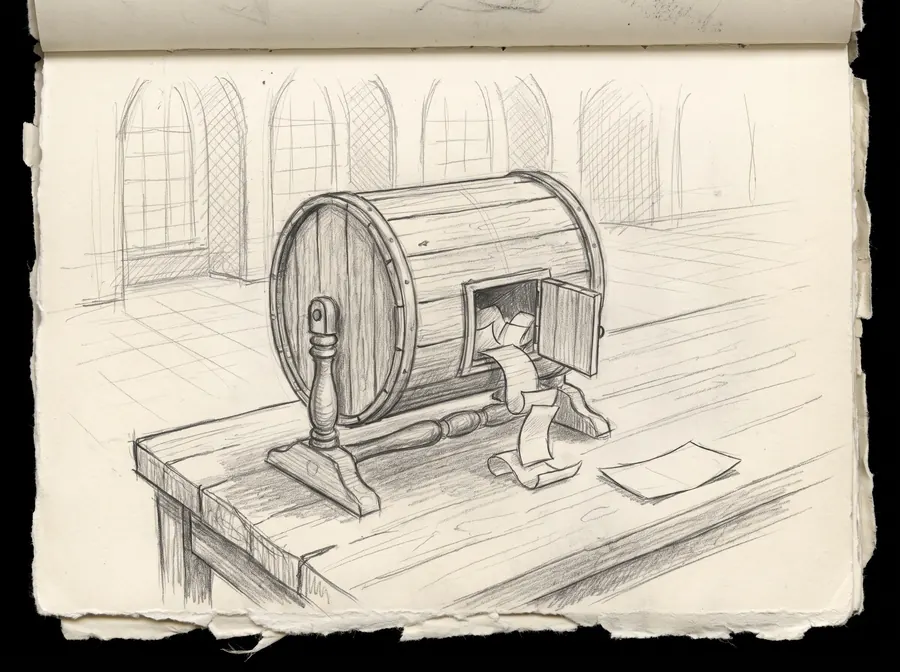
From the Sketchbook · The visual workshop
A world does not arrive
fully formed.
A room begins as a question. Where does the light fall? What has been kept? What should feel a little wrong?
These are some of the images that helped give the Long Dusk a shape. Earlier studies sit beside the paintings now used on the site, including directions that were tried and then left behind.
Warmth beneath the fields
Earlier direction · digital study
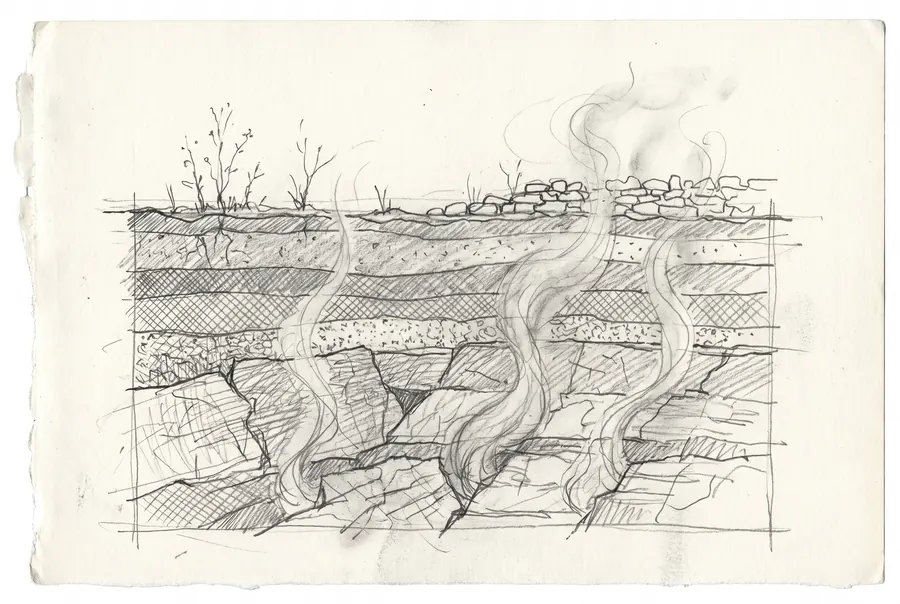
The first study explains ground-heat through a pencil-style cutaway. It makes the mechanism visible, but leaves the place at a distance.
Current direction · finished painting
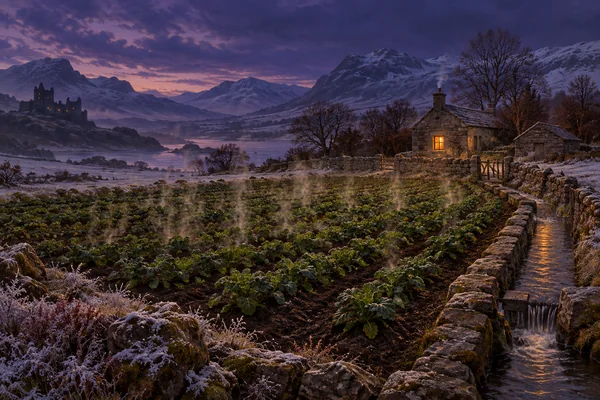
The painting puts the idea back into a lived landscape: tended soil, a little vapour, frost further out. The world can be understood through the way people inhabit it.
The weight of a document
Earlier direction · digital study
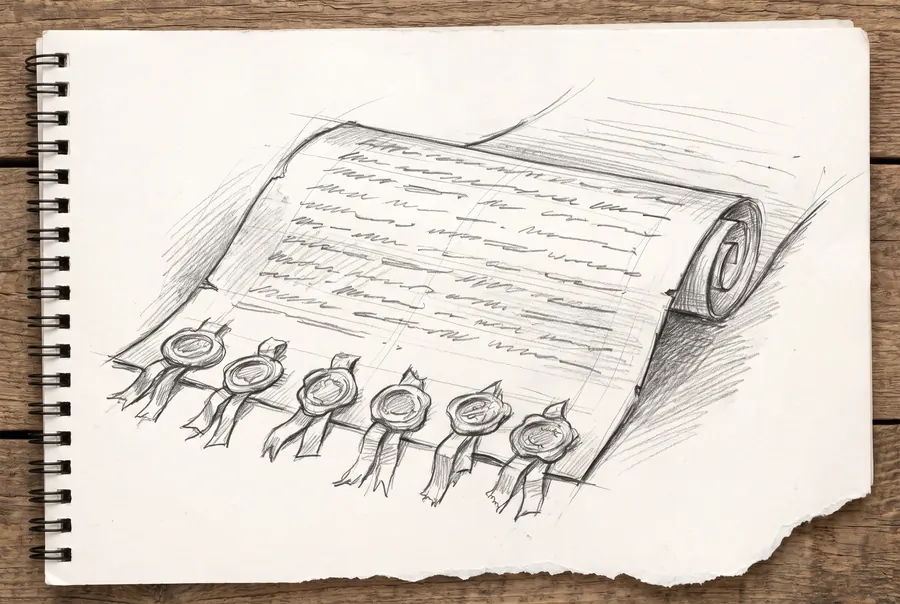
The early Compact study treats the treaty as an object to examine. Its marks and paper belong to the first, more diagrammatic version of the lexicon.
Current direction · finished painting
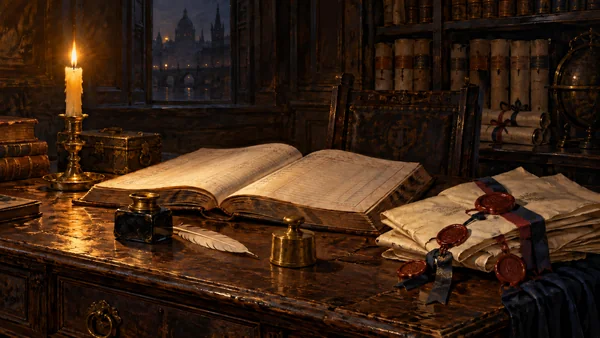
The later still life gives the record a room, a surface, candlelight. It is a different composition about the same subject: a law that lasts longer than the people who wrote it.
Finding the light-band
Earlier direction · digital study
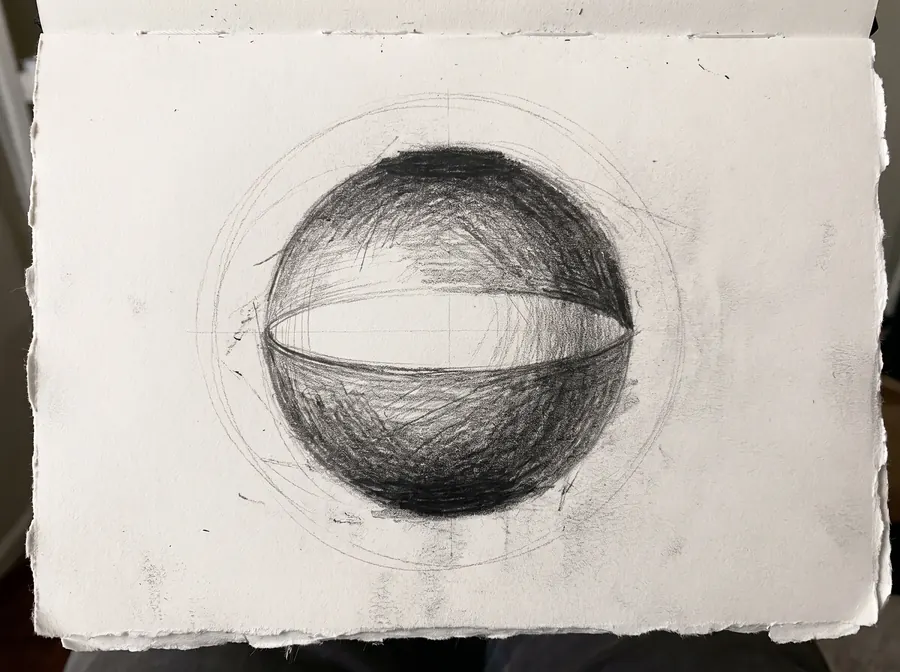
The pencil-style study begins with the shape of the idea: a belt of surviving daylight in a darkening world.
Current direction · finished painting

The painted globe gives the idea an object and a setting. A narrow belt of gold holds against the dark surface: a visual metaphor for the daylight that remains.
Keeping a familiar face.
The people on the covers need to remain themselves when they step into a room.
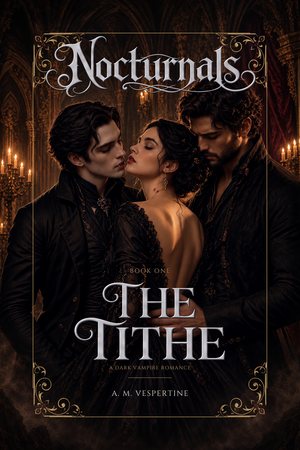
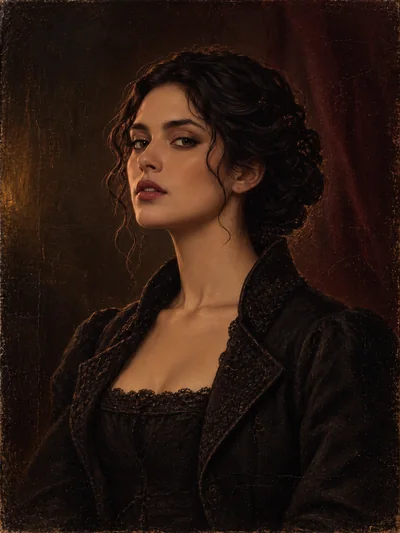
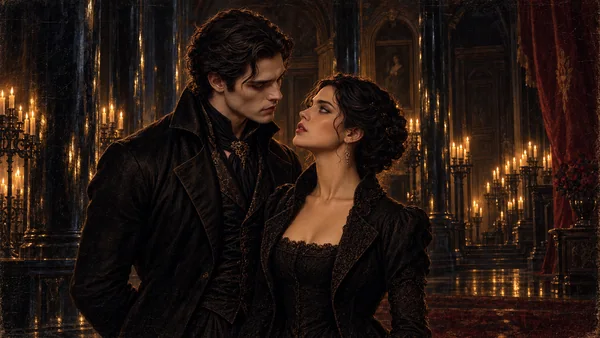
Here the connection is recorded directly: the cover of The Tithe and the approved portraits of Liora and Corvain were supplied as visual references for the Vespertine painting. Faces, clothing, and the distance between two people gave the new composition its starting point.
Kept in the workshop
The versions left behind still matter.
The earlier Drawing study has moved out of the lexicon, but it belongs in the record of how the site found its tone.