
I
The Tithe
A Dark Vampire Romance · Nocturnals, Book 1
She took her sister’s place in the Drawing. The lord of the dusk house was not supposed to want her. He was not supposed to ask.
- The couple
- Liora Vess, Corvain Duskmantle, and Rhen Marrow
- Register
- Control, restraint, the bite
- Its instrument
- the asking
- Length
- 102,179 words · 357 pp
On the pageDark romance. Contains explicit sex, blood and feeding, captivity dynamics, violence, terminal illness and grief. All romantic leads are adults.
Read chapter one — the drawing free · 3,593 words, no sign-up
The book
Liora Vess is a surgeon’s daughter from the light-band. When the Compact calls a name, she lies and goes east in her sister’s stead — into a house that has not taken a living throat in sixty years, and into the keeping of Corvain Duskmantle: ancient, starving, bound by a law that says nothing here will be taken. His wolf, Rhen, keeps that law too.
They will not take her blood without a yes. They will not keep the closed room this house made of love, or the rot that has been eating the lord from the inside since before her grandmother was born. One hour. One ask. If she stays, it is because she chooses the bite.
A standalone dark vampire romance. Forced proximity. Why-choose / triad. Open-door explicit heat. Nocturnals, Book 1. Complete in itself. 18+.
Read the full description
She took her sister’s place in the Drawing. The lord of the dusk house was not supposed to want her. He was not supposed to ask.
Liora Vess is a surgeon’s daughter from the light-band. She was trained to cut, to keep a body alive, and to tell the truth about what is dying. When the Compact calls a name, the name is her sister’s. Liora lies. She goes east in that other woman’s stead — into Court Vespertine, a house that has not taken a living throat in sixty years, and into the keeping of Corvain Duskmantle.
He is ancient. He is starving. He wrote a law so that nothing in his rooms would ever be taken again, and he is dying of it. His wolf, Rhen Marrow, keeps that law too. They will not drink her. They will not touch her. They will not let her walk out until the Drawing is finished. The closed room at the end of the east wing is still locked. The rot that has been eating the lord from the inside predates every woman who has ever loved him, including the one whose name he will not say in the daylight.
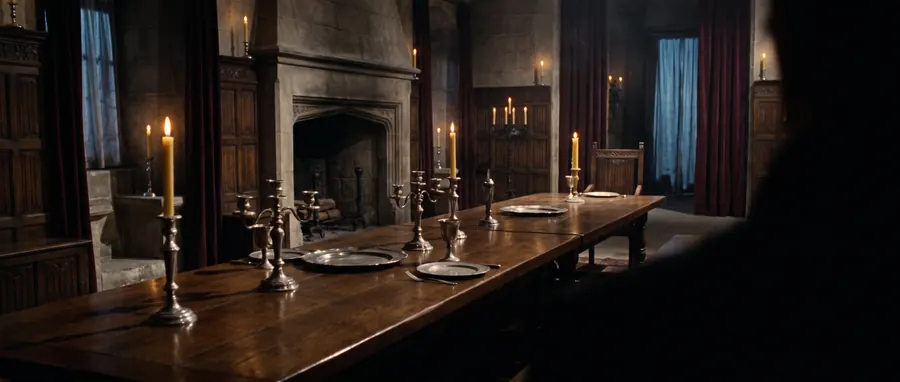
Vespertine is a dusk court with good silver and a cellar that should not exist. The staff still set a place. The east wing still smells of a fire nobody will discuss. Liora was not sent here to fall in love. She was sent here — she sent herself here — because someone in her family was going to be eaten by a procedure, and she is the one who knows how to stand in a room and not look away. Her sister was the name on the paper. Liora is the one who got on the coach. She keeps a surgeon’s hours in a house that does not sleep, and she will not pretend the lord’s hunger is romantic until someone has said the word out loud and meant it.
Corvain has not asked a living woman for anything in sixty years. Rhen has been the only person he asks. That was the arrangement: a vampire who would rather starve than take, a wolf who stayed when the court went quiet, and a law posted where a guest could read it. Then she arrived, and the arrangement started to fail in both directions. He wants her blood. He wants her to stay. He will not take the first without the second, and he will not take the second as a hostage. Rhen wants both of them and is done pretending that is a simple loyalty.
The Drawing was struck from the books for a reason: it works. One hour. One ask. If she stays past the hour it is because she chooses the bite — and because two men who have spent a lifetime refusing to want anything have started wanting her, and each other, and a third way out of a house that has been a tomb with excellent manners.
This is a why-choose dark vampire romance. Forced proximity. A morally grey vampire who will not take, a wolf who has been the only living thing in that restraint for years, and a woman who will not be managed. The burn is slow until it is not. The bite is on the page. The closed room is on the page. The grief is not a spice note. It is the third person in the bed.
A standalone. Nocturnals, Book 1. Complete in itself — and the first door into a five-book dusk-land where consent is the law and the sun is not dying so much as being paid out. If you want a vampire who asks, a wolf who cannot lie about wanting, and a heroine who treats a bite like a surgical decision, start here. Open-door explicit heat. 18+.
On the page: explicit sex; a vampire, a wolf, and the woman who will not be managed; the bite; captivity dynamics; terminal illness and grief. All romantic leads are adults.
Free to read · no sign-up
Chapter One — The Drawing
- Length
- 3,593 words
- Of
- 42 chapters
- Volume
- Book 1 of 5
- Heat
- Explicit · 18+
The morning of the Drawing, I stitch a fisherman's thumb back together and think about light-tax.
That's the truth of it. The great machinery of empires turns somewhere past the wall, courts of things that will outlive every person in this room are deciding the price of blood, and I am bent over a callused hand in my father's surgery doing arithmetic. Four stitches. The thread costs more than he'll pay us. The lamp I'm working under burns sun-oil, which went up again this spring, because everything that holds light goes up every spring and will go up every spring for the rest of my life. The sun is dying and the first place you feel it is in the ledger.
"You're quiet," the fisherman says.
His name is Osk and he has been coming to this surgery since before I was tall enough to see over the table. He has kind eyes and a smashed thumb and he is watching my needle the way everyone watches a needle, as if looking away is what makes it hurt.
"I'm counting."
"Stitches?"
"Money." He laughs, which makes his hand jump, which costs him. I put my elbow on his wrist the way my father taught me. Weight, not grip. People fight a grip; nobody fights weight. "Hold still. What did this, a winch?"
"Hatch cover. Boat's got a temper." He watches the third stitch go in. "You've got his hands."
"I've got his hands and half his temper and none of his patience, so don't move."
Osk goes obligingly still, and then, because everybody talks on Drawing morning and nobody talks about the Drawing, he tells me about the catch, which is poor, and the new dues on the west quay, which are worse, and the fact that the deep boats now run four hours further out than his father's ever did, chasing water that still knows what to do with a fish. The sea is failing the same way everything is failing here: not dramatically. Just a little less, every year, forever.
I tie off, dress it, and tell him to keep it dry, which he won't.
"What do I owe you?"
"Two," I say, and he counts out three, and puts the third on the table with a fisherman's flat refusal to discuss it, and at the door he stops with his cap in his good hand and says what everyone says on this particular morning, awkwardly, to nobody in particular:
"Well. Luck to your house today."
"And yours," I say.
He has four daughters. Three of them are of age.
Through the wall I can hear Elise moving around the kitchen, and that's how I know she didn't sleep either. My sister is nineteen and moves like a bird when she's frightened, all small landings — a cup set down, a step, a pause, another step. Every year on Drawing day she's a bird.
I clean the instruments and lay them out on the tray in their order, which is my father's order and his teacher's before him, and I catch myself squaring the handles the way you'd straighten a picture, and I make myself stop, because I know exactly what I'm doing. We are a household that manages fear through logistics. That's not a criticism. It's the only inheritance we've got.
My father comes down at the eighth bell with his good coat over his arm and his hair wet from the basin and looks at the tray, then at me, then at the tray again.
"You've done the instruments."
"I've done the instruments."
"You did them last night."
"Then they're very clean," I say, and Doran Vess makes the sound he makes instead of laughing, and goes and stands at the window looking out at the street with his coat over his arm for a good deal longer than a man needs to look at a street.
Meridian is a city built to hoard daylight.
From our street it rises in shelves toward the harbour, every roof set with pale-glass to catch and keep, walls washed white until the whole city squints. Foreigners used to call it beautiful. I have seen the paintings from my grandmother's time and it was beautiful, back when the light came down like something that could afford to be wasted — women on the harbour steps with parasols, if you can imagine such a thing. Parasols. People used to need shade.
Now the sun is a coin someone is slowly closing their hand around. It still rises. It's still ours — this narrow band around the world's middle where the dusk hasn't reached, walled cities strung along the light like beads on the last bright wire. But it comes up thin, and it comes up tired, and it has been coming up thinner and more tired for three hundred years, and every man, woman and child in Meridian can feel in their skin what the astronomers won't say plainly: the wire is shortening from both ends.
You can measure it in the city if you know where to look, and I do, because my father made a study of it the year my mother died and needed something to do with his hands at night. The pale-glass on the roofs used to be a luxury and is now a mortgage. The vineyards on the north terraces went over to lamp-crops when I was eleven. There are three churches of the light in this quarter and all three have added a service, because when a thing starts to go, people pray at it.
And the price of an hour of good burning has gone up in every year of my life. That's the honest instrument. Never mind the astronomers; watch the sun-oil.
The dark isn't empty, is the thing. That's what changed everything, when the dusk began to spread — not the cold, not the crops, not even the wars our great-grandparents fought over the last good latitudes.
The dark turned out to have owners.
By midmorning the whole quarter is moving toward the Salt Court, because attendance is compulsory and because there is a horrible comfort in being one face among ten thousand when the names come out.
It's a strange procession. Everyone in their good clothes; nobody talking above a certain volume; the children scrubbed and hushed and sensing, the way children do, that the adults are frightened of something they've been told is a formality. Shutters going up on the shops as we pass. The Ilvers on the corner have hung their door with white, which is what people do when they have somebody of age in the house — not a charm, exactly. A statement. We know what today is.
My father walks between Elise and me with his good coat brushed and his surgeon's bag over his shoulder, as if the Drawing might at any moment produce a wound he could be useful for. It isn't a foolish hope. Some years, at the reading of the names, it does; two years ago a man went down with his heart at the third name and my father had his coat off and his knee on the cobbles before the crowd had finished making room.
"They took a girl from Chandler's Row last year," Elise says, to no one. "Her mother is still—"
She stops. Everyone's sentences stop on Drawing day. The city is full of unfinished clauses.
"Ten names," our father says. "Ten, out of a city of two hundred thousand. Eat something." He hands her a heel of bread from his pocket like she's nine. She takes it and doesn't eat it and he doesn't make her.
I don't say what I'm thinking, which is that ten out of two hundred thousand is a lie of arithmetic — the kind of lie that's true in every particular and false in its entirety, which are the only lies that survive three centuries of official repetition. It isn't ten out of two hundred thousand. It's ten out of the households poor enough that nobody intervened, on a roll drawn up by clerks whose own children are somehow never on it, in the quarters where the roofs are old and the pale-glass is patched and the rent has eaten the savings that would have bought an exemption nobody will admit exists.
My family patches nets and stitches thumbs on the sun-starved side of a starving city.
Our odds are not two hundred thousand to one. They never were.
The Salt Court is the one place in Meridian nobody whitewashes, because it doesn't need it: a wide square floored and walled in stone so white it hurts, quarried from the salt cliffs in a richer century, big enough for the whole quarter and the two beyond it. Ten thousand people, and it isn't full.
On the far side they've built the platform. Compact blue hangs from it in long banners — that deep colour that doesn't exist anywhere else in this city, the blue of the hour after sundown. We hoard yellow. They wear the thing that eats it.
The Compact clerk is human, which surprises people who have never seen a Drawing. Of course he's human. The courts don't come into the light for this. They have a treaty and a bureaucracy and people like this — a neat, grey-faced man with a ledger the size of a paving stone — to do it for them, and the fact that our own species handles the paperwork is either the most humiliating part or the most sensible, depending on how honest you're feeling.
He has two assistants and a strongbox and a folding desk. He sets the ledger down on it with both hands, the way you'd set down something that outranks you.
The ledger matters more than the man. Everyone's eyes are on it. Inside it, I know — everyone knows — are the tithe-rolls, and a page for each name, and the seal of the Nocturne Courts pressed into wax the colour of a dried wound.
The reading of the terms comes first. It's the same every year and no one listens and everyone hears it anyway, the way you hear weather.
By covenant between the Daylight Remnant and the Nocturne Courts, this city renders yearly ten tithes of blood, willing, whole, and of age. Each tithe serves seven years, housed and protected per the Compact, and returns enriched.
Or does not return. The clerk never says that part. The square says it for him, silently, ten thousand people not saying it at once, which is the loudest sound I know.
Then the word everyone waits for, because it's the word the whole bargain balances on.
Willing.
Here is what they teach us, in school, in church, in the pamphlets the Compact prints on good paper while the rest of the city prints on rag: the lords of the dusk cannot take.
It isn't chivalry. It's biology, or whatever passes for biology in things that plan in centuries — blood freely given sustains them, and blood taken by force is poison, a slow rot of the mind that has cracked older and greater creatures than whatever holds your city's treaty. This is meant to comfort us, and it does, mostly, because it is the only fact in the whole arrangement that puts anything at all in our hands. They can't just harvest you, see. They need you to say yes.
And a tithe who swears willingness falsely is worse than a cheat. She's a weapon: poison sworn in as food, set walking at a lord's own table. The Compact burns falsely sworn tithes. It is the one crime in the treaty with no trial, because the oath was the trial — you were asked, in public, with your hand on the ledger, and you answered.
They tell us that part in school too, at about eleven years old, with pictures.
So the courts send stipends, and the stipends are real money, life-changing money, more than my father makes in four years of thumbs and fevers, and every year ten poor families discover how willing a person can become.
That's the genius of it. They never take. They just wait, patient as the dark, for the arithmetic to do it for them.
The clerk opens the ledger.
The square goes so quiet I can hear the harbour — the rigging, the gulls, the water working at the quay stones half a mile off. Ten thousand people breathing in a stone box.
Names are drawn by lot from the box and read by rote, family name first, and the first four fall on streets I don't know.
Each one is followed by the same thing: a cry somewhere in the crowd, and then, spreading outward from the cry like rings in water, the terrible loosening of everyone it didn't touch. Relief has a sound. It's ugly. Shoulders coming down, a hand over a mouth, somebody's breath going out in a rush three rows back.
I make it too. That's the part I'll think about later, on a coach in the dark. I stood in that square and made the ugly sound four times.
The third name takes a boy — I see him, that's the trouble, I see him get lifted onto a bollard by his friends so the clerk can confirm his age, seventeen and grinning like a fool because half the quarter is looking at him, and his mother is not grinning, his mother has gone the colour of the stone. The fourth is a woman of thirty with two children on her hips who hands them to a neighbour without a word and walks toward the platform like a woman going to a job.
That's the thing nobody puts in the pamphlets. Most of them just walk up. Seven years and a fortune, and the alternative is refusing in front of ten thousand people and the Compact's law, and so they walk, and the city watches them walk, and calls it willing.
The fifth name is Vess.
I am already turning toward my father — his name, it will be his name, he's fifty-eight, they'll refuse him at examination, there's a mercy in the rules somewhere and I am a surgeon's daughter and I will find it and open it up — when the clerk finishes.
"Vess, Elise. Aged nineteen. Lantern Street."
Elise makes no sound at all.
That's the detail I'll keep, I think, for the rest of whatever my life turns out to be: ten thousand people rippling, my father's bag hitting the stone, and my sister standing perfectly still with a heel of bread in her hand, nodding slightly — like a student who has been asked a question she studied for and hoped, anyway, would not come up.
Then she says, quietly, to me, not to him: "I dreamed the clerk's mouth. Last night. I watched it say that."
And she laughs. One small awful note.
My sister has dreamed true since she was a child, and the one mercy of her life is that she is the only person who has never believed it.
I am moving before I decide anything.
This is what people get wrong about decisions. They imagine a scale, a weighing, a moment on a hilltop with your reasons laid out like a picnic. There was no moment. There was my body walking to the front — people getting out of the way, the white stone glaring, my father's voice starting somewhere behind me and not arriving — and my own voice, steadier than I have ever heard it, the needle-and-thread voice, the weight, not grip voice, saying the words I did not know I had memorized:
"I invoke substitution. Blood for blood of the same house. I'm her sister."
The clerk looks up.
For one second — I have turned this over for a long time since, and I am nearly sure of it — there is a flicker of something human in that grey official face. Not sympathy exactly. The look of a man who has read this clause aloud a thousand times and has heard it invoked four times, and is now going to have to write.
"Age?"
"Twenty-six."
"Trade?"
"Surgeon's apprentice. Nine years."
He writes it down, and the writing is the thing that does it — the small dry scratch of a nib, and my whole life going over onto a different line.
The clause exists for the courts' convenience, not our compassion. I understand that even standing there. A tithe who faints and weeps and has to be carried aboard ruins the pageantry; the lords prefer their willing to arrive plausible, and a substitute is by definition a volunteer. It is written into the treaty as a mercy and functions as quality control.
Behind me my father is saying my name in a broken cadence, over and over, the way you'd say it to wake someone. And Elise has both hands in my sleeve, bread lost somewhere underfoot, saying no, no, you can't, it was mine, it came to me — as if the worst thing that had ever happened to this family were a gift somebody was stealing from her.
I turn around and take her wrists. Weight, not grip.
"Listen to me. Look at me. Seven years, and then I come home rich and insufferable and buy Papa a house with a roof that doesn't leak, and you'll have to be nice to me for the rest of your life." She is shaking her head, wet-faced, breathing wrong. "Elise. If they'd read my name and you'd tried this, what would I have done?"
She doesn't answer.
"You know what I'd have done," I say. "So don't ask me to want something for you I wouldn't have taken from you. That's not love, that's just being loud about it."
"That isn't fair."
"No," I agree. "Practice being patient. Seven years."
Over her shoulder my father has picked up his bag. He is standing very straight, in his good coat, with his surgeon's face on — the one he wears to tell people things — and I know exactly what it costs him, and I know he will not make a scene in front of ten thousand people and the Compact's clerk, because a scene would change nothing and might change something for the worse, and Doran Vess has spent his whole life doing the arithmetic of what can still be saved.
He gives me one nod. That's all. I keep it.
The clerk turns the ledger toward me.
And there it is: my line, the fresh ink still wet, the wax seal beside it like a wound, and above my waiting signature, in letters someone chose to make beautiful, the oath.
Given freely. Sworn willing.
Let me be exact, because exactness is the only virtue I have left this morning.
I am not willing.
I am not going into those courts with an open heart. I am going the way a surgeon goes into a body — because the thing has to be done and my hands are the hands the job found — and everything in me that actually matters stays here, in this city, sealed, mine. What I am is decided, which resembles willing the way pale-glass resembles daylight: well enough to fool a clerk.
Whether it is well enough to fool a creature that drinks the truth out of people's veins is a problem, I tell myself, for a later chapter of my life.
I have become, in the space of a hundred heartbeats, a person who lies to the Nocturne Courts, to the Compact's law, and to her own sister, in that order and by increasing degrees.
The pen is bad. That's the last thing I remember noticing — a cheap nib, split, the kind my father would throw out. I sign in a steady hand anyway.
Vess, Liora. Willing.
The clerk blots my lie carefully, the way I blot a wound, and closes the book on it.
"Report to the eastern gate at first bell tomorrow," he says, already looking past me for whoever's grief comes next. "You'll want warm things. Where you're going, the sun doesn't."
The crowd lets us out the way water lets out a stone: closing behind, unmarked.
Out on the white stone the light is thin and tired and taxed to death, and I stop in the middle of it anyway with my eyes shut, hoarding, like a true daughter of Meridian.
Seven years. Ten thousand people around me who are not going, and me.
And it's strange, what the body does. Under the fear — and the fear is real, it moved in the moment the clerk said my sister's name and it is already measuring my rooms for furniture — there is something else. Something I would not confess to my father, or to Elise, or to any priest of the light.
It feels less like dread than like the moment before you cut. The held breath. The settled weight.
All my life the dark has been the thing at the edge of the ledger, eating the margins. It has taken the vineyards and the parasols and the fishing grounds and a girl from Chandler's Row, and it has never once been anything I could look at directly, only a rising cost in a column.
Tomorrow I get to look at what it is.
What you get
Three editions of the same book.
The paperback is a 6 × 9 in perfect-bound trade edition of 357 pages. The ebook is the EPUB itself, without DRM, for any reader you own. The audiobook is 11:00:17 across 44 MP3 files, narrated by a digital voice and kept rather than streamed. Buy all 5 volumes in paperback and every ebook and audiobook comes with them.
vampire dark romance explicit · forced proximity why choose · morally grey vampire hero · gothic romantasy slow burn · blood bond captive romance · found family dusk court · spicy vampire menage
| Words | 102,179 |
|---|---|
| Pages | 357 |
| Trim | 6 × 9 in |
| Runtime | 11:00:17 |
| Tracks | 44 |
| Set in | DR 312 |
| ISBN, EPUB | 979-8-90623-931-0 |
| ISBN, MP3 | 979-8-90623-932-7 |
| ISBN, paperback | not yet registered |
Page count measured from the print file; runtime measured from the audio masters on 2026-08-29.